The TDGF1P3 Polyclonal Antibody (PACO07229) is a valuable tool for research involving TDGF1P3, a key protein involved in pluripotency and stem cell maintenance. This antibody, specifically raised in rabbits, exhibits high reactivity with human samples and is validated for use in various applications, including Western blotting. By binding to the TDGF1P3 protein, this antibody allows for accurate detection and analysis in a variety of cell types, making it an essential component for studies in stem cell biology and regenerative medicine.TDGF1P3, also known as teratocarcinoma-derived growth factor 1 pseudogene 3, is a crucial factor in maintaining the self-renewal and pluripotency of stem cells.
Understanding the function and regulation of TDGF1P3 is vital for advancing research in stem cell-based therapies, tissue regeneration, and developmental biology. By utilizing the TDGF1P3 Polyclonal Antibody, researchers can further elucidate the mechanisms underlying stem cell maintenance and differentiation, ultimately leading to the development of innovative treatments for various diseases and conditions.
Antibody Name:
TDGF1P3 Antibody (PACO07229)
Antibody SKU:
PACO07229
Size:
50ug
Host Species:
Rabbit
Tested Applications:
ELISA, WB
Recommended Dilutions:
ELISA:1:10000, WB:1:500-1:2000
Species Reactivity:
Human
Immunogen:
Synthesized peptide derived from the Internal region of human Cripto-3.
Form:
Liquid
Storage Buffer:
Liquid in PBS containing 50% glycerol, 0.5% BSA and 0.02% sodium azide.
Purification Method:
The antibody was affinity-purified from rabbit antiserum by affinity-chromatography using epitope-specific immunogen.
Clonality:
Polyclonal
Isotype:
IgG
Conjugate:
Non-conjugated
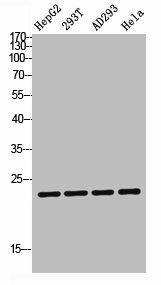
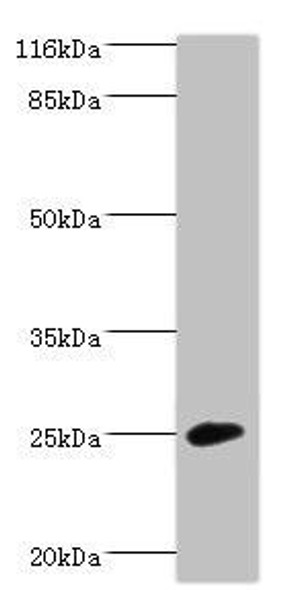
Western blot analysis of HepG2 293T AD293 Hela lysis using TDGF1P3 antibody. Antibody was diluted at 1:1000. Secondary antibody was diluted at 1:20000.
Could play a role in the determination of the epiblastic cells that subsequently give rise to the mesoderm. Activates the Nodal-dependent signaling pathway.
UniProt Protein Details:
NCBI Summary:
The TDGF3 locus has characteristics of a retrotransposon, including lack of introns and a poly(A) sequence. [provided by RefSeq, Jul 2008]