The SMAGP Polyclonal Antibody (PAC020549) is a valuable tool for researchers studying the SMAGP protein, a crucial player in mediating cellular interactions and signal transduction. This antibody, generated in rabbits, exhibits high specificity towards human samples and has been validated for use in Western blot applications. By binding to the SMAGP protein, this antibody enables accurate detection and analysis in a variety of cell types, making it an ideal choice for studies in cell biology and signal transduction research.SMAGP, also known as signal transduction adaptor molecule 1, is involved in multiple cellular processes, including intracellular signaling cascades and protein-protein interactions.
Its role in mediating signaling pathways makes it a promising target for research into diseases such as cancer, neurodegenerative disorders, and metabolic diseases. Insight into the function of SMAGP is crucial for the development of targeted therapies that aim to modulate cellular signaling pathways for therapeutic benefit. For researchers looking to investigate the intricate mechanisms of cellular communication and signal transduction, the SMAGP Polyclonal Antibody is a valuable tool that provides reliable and accurate detection of the SMAGP protein in experimental settings.
Antibody Name:
SMAGP Antibody (PACO20549)
Antibody SKU:
PACO20549
Size:
50ul
Host Species:
Rabbit
Tested Applications:
ELISA, IHC
Recommended Dilutions:
ELISA:1:1000-1:2000, IHC:1:25-1:100
Species Reactivity:
Human, Mouse, Rat
Immunogen:
Synthetic peptide of human SMAGP
Form:
Liquid
Storage Buffer:
-20°C, pH7.4 PBS, 0.05% NaN3, 40% Glycerol
Purification Method:
Antigen affinity purification
Clonality:
Polyclonal
Isotype:
IgG
Conjugate:
Non-conjugated
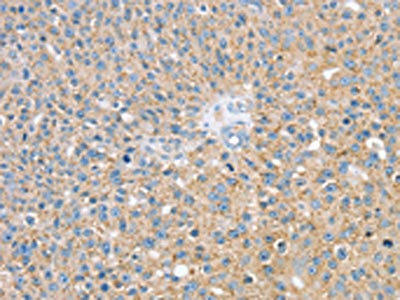
The image on the left is immunohistochemistry of paraffin-embedded Human brain tissue using PACO20549(SMAGP Antibody) at dilution 1/35, on the right is treated with synthetic peptide. (Original magnification: x200).
The image on the left is immunohistochemistry of paraffin-embedded Human breast cancer tissue using PACO20549(SMAGP Antibody) at dilution 1/35, on the right is treated with synthetic peptide. (Original magnification: x200).
Background:
SMAGP (small transmembrane and glycosylated protein) is a 97 amino acid, single-pass type III membrane protein that localizes to the membrane of cytoplasmic vesicles. Existing as a murine-specific protein, SMAGP is thought to play a role in epithelial cell-cell contacts and, via its ability to control cell adhesion, may be involved in tumor formation, as well as overall tumor invasiveness and metastasis. SMAGP is subject to post-translational O-glycosylation which is thought to be modified with sialic acid, residues. The gene encoding SMAGP maps to murine chromosome 15.
Synonyms:
small cell adhesion glycoprotein
UniProt Protein Function:
SMAGP: May play a role in epithelial cell-cell contacts. May play a role in tumor invasiveness and metastasis formation. Belongs to the SMAGP family.Protein type: Vesicle; Membrane protein, integralChromosomal Location of Human Ortholog: 12q13.13Cellular Component: nucleoplasm; cytoplasmic vesicle membrane; plasma membrane; integral to membrane; cell junction