The NLRP4 Polyclonal Antibody (PAC020062) is specifically designed for research involving NLRP4, a member of the NOD-like receptor (NLR) family implicated in inflammation and immune response regulation. This antibody, generated in rabbits, is highly sensitive and specific for human samples, making it an ideal tool for Western blot applications. NLRP4 is involved in the formation of inflammasomes, multiprotein complexes that play a crucial role in innate immunity by activating inflammatory responses. Dysregulation of NLRP4 has been linked to various inflammatory conditions and autoimmune diseases, making it a promising target for therapeutic interventions.
By utilizing the NLRP4 Polyclonal Antibody, researchers can effectively detect and analyze NLRP4 protein expression in different cell types, advancing our understanding of its role in immune regulation and inflammatory pathways. This antibody is essential for studies in immunology, inflammation, and infectious diseases, providing valuable insights for the development of novel therapeutic strategies targeting NLRP4.
Antibody Name:
NLRP4 Antibody (PACO20062)
Antibody SKU:
PACO20062
Size:
50ul
Host Species:
Rabbit
Tested Applications:
ELISA, IHC
Recommended Dilutions:
ELISA:1:2000-1:5000, IHC:1:50-1:200
Species Reactivity:
Human
Immunogen:
Synthetic peptide of human NLRP4
Form:
Liquid
Storage Buffer:
-20°C, pH7.4 PBS, 0.05% NaN3, 40% Glycerol
Purification Method:
Antigen affinity purification
Clonality:
Polyclonal
Isotype:
IgG
Conjugate:
Non-conjugated
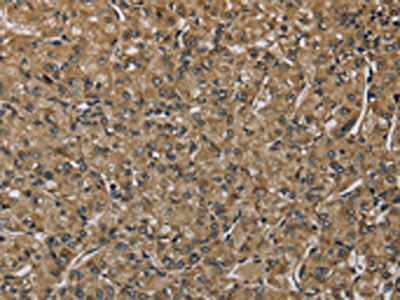
The image on the left is immunohistochemistry of paraffin-embedded Human prostate cancer tissue using PACO20062(NLRP4 Antibody) at dilution 1/40, on the right is treated with synthetic peptide. (Original magnification: x200).
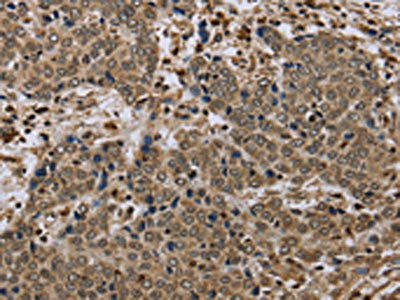
The image on the left is immunohistochemistry of paraffin-embedded Human liver cancer tissue using PACO20062(NLRP4 Antibody) at dilution 1/40, on the right is treated with synthetic peptide. (Original magnification: x200).
Background:
NALPs are cytoplasmic proteins that form a subfamily within the larger CATERPILLER protein family. Most short NALPs, such as NALP4, have an N-terminal pyrin (MEFV; MIM 608107) domain (PYD), followed by a NACHT domain, a NACHT-associated domain (NAD), and a C-terminal leucine-rich repeat (LRR) region. The long NALP, NALP1 (MIM 606636), also has a C-terminal extension containing a function to find domain (FIIND) and a caspase recruitment domain (CARD). NALPs are implicated in the activation of proinflammatory caspases (e.g., CASP1; MIM 147678) via their involvement in multiprotein complexes called inflammasomes
Synonyms:
NLR family, pyrin domain containing 4
UniProt Protein Function:
NALP4: May be involved in inflammation. Acts as a negative regulator of the type I interferon signaling pathway by serving as an adapter to promote DTX4-mediated ubiquitination of activated TBK1, and its subsequent degradation. Belongs to the NLRP family. 3 isoforms of the human protein are produced by alternative splicing.Protein type: Cancer Testis Antigen (CTA)Chromosomal Location of Human Ortholog: 19q13.43Cellular Component: cytosolBiological Process: regulation of interferon type I production
UniProt Protein Details:
NCBI Summary:
NALPs are cytoplasmic proteins that form a subfamily within the larger CATERPILLER protein family. Most short NALPs, such as NALP4, have an N-terminal pyrin (MEFV; MIM 608107) domain (PYD), followed by a NACHT domain, a NACHT-associated domain (NAD), and a C-terminal leucine-rich repeat (LRR) region. The long NALP, NALP1 (MIM 606636), also has a C-terminal extension containing a function to find domain (FIIND) and a caspase recruitment domain (CARD). NALPs are implicated in the activation of proinflammatory caspases (e.g., CASP1; MIM 147678) via their involvement in multiprotein complexes called inflammasomes (Tschopp et al., 2003 [PubMed 12563287]).[supplied by OMIM, Mar 2008]
Cancer/testis antigen 58; CT58; PAAD and NACHT-containing protein 2; PAN2; PYRIN and NACHT-containing protein 2; PYRIN-containing APAF1-like protein 4; PYPAF4; Ribonuclease inhibitor 2