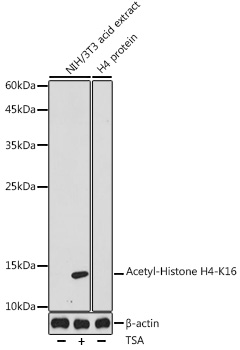
The Anti-Acetyl Histone H4 (K16) Antibody (CAB20186) is a valuable tool for research involving the acetylation of histone H4 at lysine 16, a modification associated with gene transcription and chromatin remodeling. This antibody, raised in rabbits, exhibits high reactivity with human samples and has been validated for use in Western blot applications. By binding specifically to the acetylated form of histone H4 at lysine 16, researchers can accurately detect and analyze this epigenetic mark in various cell types, making it ideal for studies in epigenetics, gene regulation, and cancer research.Acetylation of histone H4 at lysine 16 plays a crucial role in the regulation of gene expression and is implicated in processes such as DNA repair, cell cycle progression, and apoptosis.
Dysregulation of histone acetylation has been linked to various diseases, including cancer, neurodegenerative disorders, and metabolic diseases. Therefore, understanding the role of acetylated histone H4 at lysine 16 is essential for unraveling the mechanisms underlying these conditions and developing targeted therapies.The Anti-Acetyl Histone H4 (K16) Antibody (CAB20186) provides researchers with a reliable tool for studying histone acetylation and its impact on gene expression and cellular processes. Its specificity and sensitivity make it a valuable asset for investigating the role of this epigenetic modification in health and
Product Name:
Acetyl-Histone H4-K16 Rabbit Polyclonal Antibody
SKU:
CAB20186
Size:
20uL, 100uL
Isotype:
IgG
Host Species:
Rabbit
Reactivity:
Human,Mouse,Rat,Other (Wide Range Predicted)
Immunogen:
A synthetic acetylated peptide around K16 of human Histone H4 (NP_003539.1).
Histones are basic nuclear proteins that are responsible for the nucleosome structure of the chromosomal fiber in eukaryotes. This structure consists of approximately 146 bp of DNA wrapped around a nucleosome, an octamer composed of pairs of each of the four core histones (H2A, H2B, H3, and H4). The chromatin fiber is further compacted through the interaction of a linker histone, H1, with the DNA between the nucleosomes to form higher order chromatin structures. This gene is intronless and encodes a replication-dependent histone that is a member of the histone H4 family. Transcripts from this gene lack polyA tails; instead, they contain a palindromic termination element. This gene is found in a histone cluster on chromosome 1. This gene is one of four histone genes in the cluster that are duplicated; this record represents the centromeric copy.
Purification Method:
Affinity purification
Gene ID:
8370
Storage Buffer:
Store at -20℃. Avoid freeze / thaw cycles.Buffer: PBS with 0.01% thimerosal,50% glycerol,pH7.3.
Western blot analysis of lysates from NIH/3T3 cells, using Acetyl-Histone H4-K16 Rabbit pAb (CAB20186) at 1:1000 dilution.NIH/3T3 cells were treated by TSA (1 uM) at 37℃ for 18 hours.Secondary antibody: HRP Goat Anti-Rabbit IgG (H+L) (CABS014) at 1:10000 dilution.Lysates/proteins: 25μg per lane.Blocking buffer: 3% nonfat dry milk in TBST.Detection: ECL Basic Kit (AbGn00020).Exposure time: 90s.